


Retinal Detachments Are Increasing Among Americans With Myopia: Why Early Myopia Management Matters
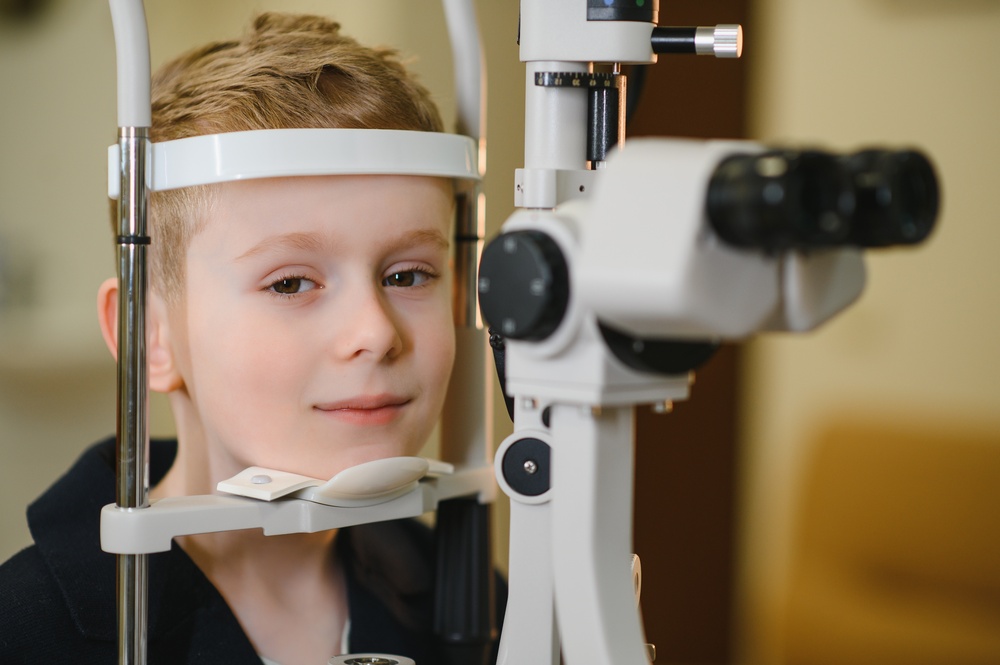
Nearsightedness, also called myopia, is becoming increasingly common among children and adults. While many people think of myopia as simply needing glasses or contact lenses to see clearly, it can also have important consequences for long-term eye health.
A 2026 study examining more than one million patients with myopia in the United States found a substantial increase in recorded retinal detachments over the past decade.
These findings highlight why myopia deserves attention beyond correcting blurry distance vision, particularly in children whose eyes are still growing.
What Did the New Study Find?
Researchers analyzed electronic health records from 1,094,920 patients with myopia across multiple U.S. healthcare institutions between 2015 and 2024.
The study found that retinal detachment prevalence among patients with myopia increased from 1,539 to 4,069 cases per 100,000 outpatient visits during that period.
This represents approximately a 2.6-fold increase in recorded prevalence over ten years.
The study also found that:
- Retinal detachment prevalence increased across all age groups studied.
- Older adults, particularly those ages 70 to 79, had the highest recorded prevalence.
- Male patients had higher recorded prevalence than female patients.
- Patients with a history of cataract surgery may have additional retinal detachment risk factors.
Importantly, the researchers examined medical records rather than following individual patients over time. The findings show an increase in recorded retinal detachments among people with myopia, but they do not establish that myopia caused every case or explain exactly why the increase occurred.
Why Does Myopia Increase the Risk of Retinal Detachment?
Myopia commonly develops when the eye grows longer than normal from front to back, a measurement known as axial length.
As the eye elongates, the retina and other structures at the back of the eye undergo changes that can increase susceptibility to certain complications.
One of these complications is retinal detachment.
A retinal detachment occurs when the light-sensitive retina separates from the underlying tissue that supports it. Without prompt treatment, retinal detachment can cause permanent vision loss.
People with higher levels of myopia generally have a greater risk of retinal detachment than those with little or no myopia.
However, retinal detachment can occur in people with mild myopia or no myopia at all.
Why Myopia Management in Children Is Important
For children, myopia is more than a prescription that may change each year.
As children grow, their nearsightedness can progressively worsen. This often occurs alongside increasing axial length.
Higher levels of myopia are associated with greater lifetime risks of several eye conditions, including:
Retinal detachment
Myopic macular degeneration
Glaucoma
Certain types of cataracts
Traditional glasses and contact lenses correct blurry vision but generally do not slow the underlying progression of myopia.
Myopia management uses specialized treatments designed to slow prescription changes and excessive eye growth during childhood.
The goal is to help children finish their growing years with less myopia than they might otherwise develop.
Although slowing myopia progression is expected to reduce certain long-term risks, additional research is needed to determine precisely how much individual treatments reduce future retinal detachment rates.
What Myopia Management Options Are Available?
At Eyes & Optics, we offer several approaches to myopia management for children and teenagers.
Treatment recommendations depend on the child's age, prescription, eye health, lifestyle, and rate of progression.
Options may include:
Orthokeratology (Ortho-K)
Ortho-K uses specially designed contact lenses worn overnight to temporarily reshape the cornea.
Children remove the lenses in the morning and can often see clearly during the day without glasses or daytime contact lenses.
Ortho-K can also help slow myopia progression and axial elongation in appropriately selected children.
Specialized Soft Contact Lenses
Certain soft contact lenses are designed to correct vision while helping slow myopia progression.
Options include MiSight 1 day and other specialized lenses designed for myopia management.
These lenses may be appropriate for children who prefer daytime contact lens wear.
Low-Dose Atropine Eye Drops
Low-dose atropine is another treatment option used to help slow myopia progression in some children.
The drops are generally used once daily, with treatment concentration and follow-up determined by the prescribing doctor.
In the United States, low-dose atropine for myopia management is an off-label treatment.
Essilor Stellest Lenses
Essilor Stellest lenses are specially designed spectacle lenses that correct blurry distance vision while incorporating optical technology intended to slow myopia progression.
They may be an option for children who prefer glasses or are not ready for contact lenses.
Our doctors help families understand the benefits, limitations, and expectations of each treatment before making a recommendation.
Warning Signs of a Retinal Detachment
Retinal detachment can occur suddenly and requires immediate medical attention.
Important warning signs include:
Sudden onset of new floaters
Flashes of light, particularly in one eye
A dark curtain or shadow moving across the vision
Sudden loss of peripheral vision
Unexpected changes or loss of vision
New flashes or floaters require prompt, typically same-day, dilated retinal evaluation. A curtain, shadow, or sudden loss of vision requires immediate emergency assessment.
Retinal detachment is not always painful, so patients should never wait for discomfort before seeking care.
The Importance of Regular Eye Exams
Regular comprehensive eye examinations are important for patients with myopia, even when their glasses or contact lenses seem to be working well.
For children undergoing myopia management, our doctors monitor prescription changes, eye health, and axial length when appropriate.
These measurements help us evaluate how myopia is progressing and whether treatment adjustments may be beneficial.
For adults with myopia, dilated retinal examinations can help identify peripheral retinal changes and other findings that may require closer monitoring.
While routine examinations cannot prevent every retinal detachment, they provide an opportunity to identify certain risk factors and educate patients about symptoms that require urgent attention.
Protecting Your Child's Vision for the Future
The recent increase in recorded retinal detachments among Americans with myopia is an important reminder that nearsightedness can affect more than day-to-day vision.
For children, early identification and appropriate myopia management may help reduce the degree of nearsightedness they develop as they grow.
At Eyes & Optics, our doctors provide personalized myopia management for children and teenagers in Farmington Hills and throughout Metro Detroit.
We offer comprehensive evaluations and treatment options including Ortho-K, specialized soft contact lenses, low-dose atropine, and Essilor Stellest lenses.
If your child's glasses prescription continues to increase, we encourage you to schedule a myopia management evaluation to discuss available options.
Call Eyes & Optics at 248-788-1610 or visit eyesandoptics.com to schedule an appointment.
At Eyes & Optics, we're proud to provide personalized eye care for individuals and families in Farmington, Farmington Hills, Novi, Commerce Township, West Bloomfield, Walled Lake, Livonia, Northville, Orchard Lake, Plymouth, Wixom and surrounding Metro Detroit communities.
Sources
Zhang D, Abbass NJ, Jeong H, et al. Prevalence of Myopia-Related Retinal Detachments in a Multi-Institutional United States Platform From 2015 to 2024. Journal of VitreoRetinal Diseases. Published February 23, 2026.
Lane A. Rising Rates of Myopia-Linked Retinal Detachments in the US. Myopia Profile. August 31, 2026.
International Myopia Institute. IMI 2025 Digest. Investigative Ophthalmology & Visual Science. 2025.
International Myopia Institute. IMI Clinical Management Guidelines Report. Investigative Ophthalmology & Visual Science. 2019.


Office Hours
| Monday | 9:00am - 7:00pm |
| Tuesday | 9:00am - 6:00pm |
| Wednesday | 9:00am - 6:00pm |
| Thursday | 9:00am - 6:00pm |
| Friday | 9:00am - 5:00pm |
| Saturday | 9:00am - 1:00pm |
| Sunday | Closed |
© 2026 Eyes & Optics All rights Reserved. Privacy Policy Sitemap
Powered by
