


Introducing Stellest 2.0: A Breakthrough in Spectacle-Based Myopia Control
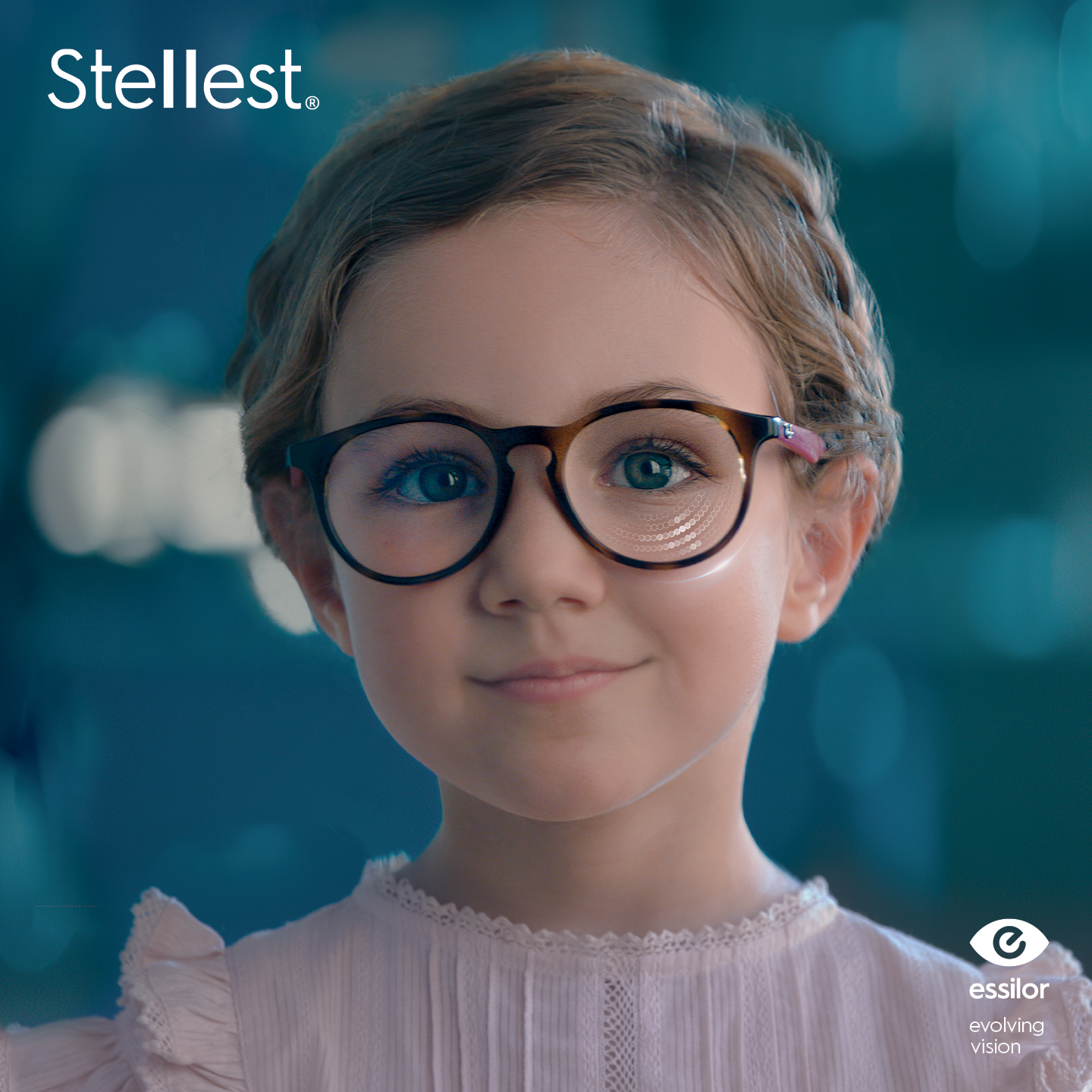
Essilor’s newest myopia-control lens, Stellest 2.0, has been shown to slow myopia progression even more effectively than the original Stellest design. Powered by upgraded H.A.L.T. MAX technology (Highly Aspherical Lenslet Target), this next-generation lens delivers a stronger optical signal to reduce eye growth in children.
What the New Research Shows
A recent peer-reviewed, year-long clinical study evaluated Stellest 2.0 in a randomized contralateral crossover trial involving 50 children aged 6–10. Each child wore the original Stellest lens in one eye and the Stellest 2.0 lens in the other for six months, then switched for the remaining six months.
Key outcomes:
Axial elongation, the primary indicator of myopia progression, was significantly lower in eyes wearing Stellest 2.0 compared to the original version.
Stellest 2.0’s enhanced lenslet design created a stronger defocus signal, meaning the optical cues that slow eye growth were more effective.
The new lens increases both the power and asphericity of the lenslets, placing the “volume of non-focused light” farther from the retina — a key mechanism behind its improved performance.
In short: Stellest 2.0 slowed eye growth more than the original Stellest lenses.
Why This Matters for Our Pediatric and Special-Needs Practice
A strong option for children who can’t wear contacts
Many younger children — and many special-needs patients — may not be ready or able to use myopia-control contact lenses. Stellest 2.0 provides an effective spectacle-based approach with no added risk of contact lens complications.
Helpful for faster progressors
Children who show rapid increases in axial length may especially benefit from the stronger defocus signal created by the new lens.
Scientifically robust
Because this study used a within-subject design, the results offer strong, clinically credible evidence that parents can understand and trust.
Availability
The lens is currently offered in select markets abroad and is expected to expand globally beginning in 2026. This gives us an opportunity to start educating families now and include Stellest 2.0 in long-term myopia-management planning.
What Parents Should Know
Consistent wear is essential for the lenses to work effectively.
A brief adaptation period is normal, as with other advanced optical designs.
These lenses should be part of a comprehensive plan, which may include increased outdoor time, reduced prolonged near work, and regular monitoring of axial length.
We will guide families on current available options and integrate Stellest 2.0 when it becomes accessible in our market.
Bottom Line
Stellest 2.0 represents an exciting advancement in spectacle-based myopia management. With strong early evidence showing improved control of axial elongation, it may soon become a valuable addition to our treatment offerings for children — especially those who need a low-risk, non-contact-lens solution.
We will continue to update our patients and families as more information and availability timelines are released.
Sources:
Delaney-Gesing A. “Essilor Stellest 2.0 Lenses Demonstrate Superior Efficacy in Slowing Myopia Progression.” Glance by Eyes On Eyecare, November 20, 2025.
EssilorLuxottica. “New Peer-Reviewed Study on Essilor Stellest 2.0 Spectacle Lenses with H.A.L.T. MAX Technology.” Press Release, November 13, 2025.
Review of Optometry. “Second-Generation Stellest Lens More Effective in Slowing Axial Elongation.” November 2025.


Office Hours
| Monday | 9:00am - 7:00pm |
| Tuesday | 9:00am - 6:00pm |
| Wednesday | 9:00am - 6:00pm |
| Thursday | 9:00am - 6:00pm |
| Friday | 9:00am - 5:00pm |
| Saturday | 9:00am - 1:00pm |
| Sunday | Closed |
© 2026 Eyes & Optics All rights Reserved. Privacy Policy Sitemap
Powered by
